Location
1120 Holland Drive #13 Boca Raton, FL 33487
Contact info
info@sustainableitad.com
(561) 591-3476
Location
1120 Holland Drive #13 Boca Raton, FL 33487
Contact info
info@sustainableitad.com
(561) 591-3476

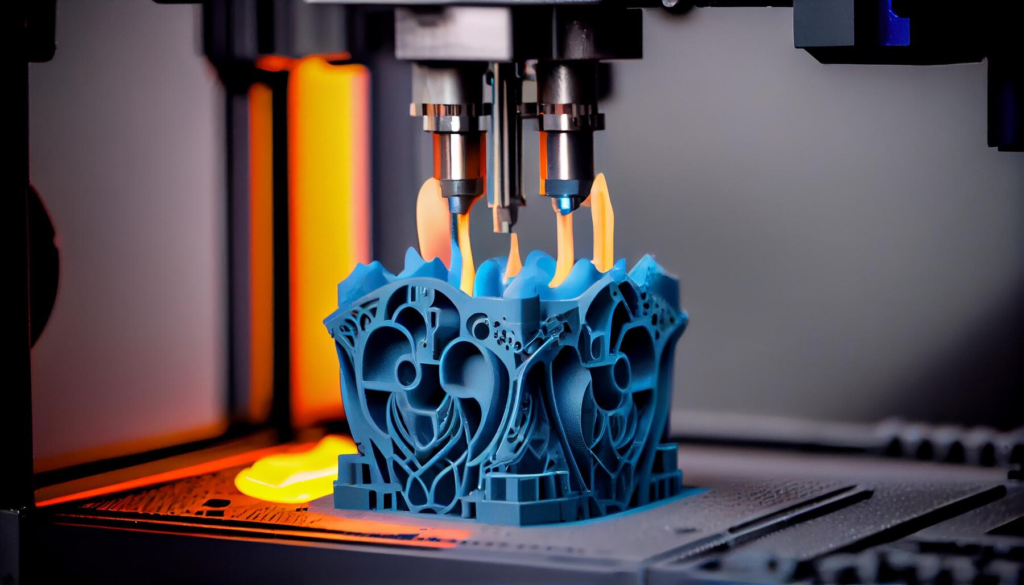
In the fast-evolving field of IT asset disposition (ITAD), 3D printing is emerging as a game-changer for spare parts management. As organizations seek efficient and sustainable solutions for managing their IT assets, integrating 3D printing into ITAD processes offers a revolutionary approach to spare parts production and inventory management. This article explores how 3D printing can transform spare parts management in ITAD, highlighting its benefits, practical applications, and future potential.
If you need ITAD services contact Sustainable ITAD below:
Traditional spare parts management involves several challenges, including high costs, long lead times, and the necessity of maintaining large inventories. IT assets, such as servers, computers, and networking equipment, often require specific components that may no longer be in production or are difficult to source. This situation leads to extended downtime and increased costs for businesses. Furthermore, managing a vast inventory of spare parts requires significant storage space and resources, adding to operational complexities and expenses.
3D printing addresses these challenges by enabling on-demand production of spare parts. This technology allows ITAD companies to produce exact replicas of components as needed, reducing the need for extensive inventories and minimizing storage costs. Additionally, 3D printing offers the flexibility to produce parts for older or obsolete equipment, ensuring that businesses can maintain and repair their IT assets without lengthy delays.
One of the primary advantages of 3D printing is the significant reduction in lead times. Traditional manufacturing processes often involve long wait times for parts to be produced and shipped. With 3D printing, parts can be produced in-house and on-demand, drastically reducing the time required to get equipment back up and running. This rapid turnaround is crucial for minimizing downtime and maintaining business continuity.
Moreover, 3D printing supports sustainability initiatives by reducing waste and conserving resources. Traditional manufacturing processes often result in excess material and waste, whereas 3D printing uses only the necessary amount of material for each part. This efficiency aligns with the growing emphasis on sustainability in ITAD, helping organizations meet their environmental goals.
Several practical applications of 3D printing in ITAD illustrate its transformative potential. For example, ITAD companies can use 3D printing to create custom brackets, mounts, and adapters for various components, ensuring compatibility and secure installation. These custom solutions are particularly beneficial when dealing with equipment from different manufacturers or when modifications are needed to integrate new technology with existing systems.
Another application is the production of hard-to-find or obsolete parts. As IT equipment ages, finding replacement parts can become increasingly difficult and expensive. 3D printing allows ITAD companies to produce these parts in-house, extending the life of IT assets and reducing the need for costly replacements. This capability is especially valuable for maintaining legacy systems that are critical to business operations.
Furthermore, 3D printing can facilitate rapid prototyping and iterative design processes. ITAD companies can quickly produce and test multiple iterations of a part, optimizing its design for performance and durability. This agile approach to design and production enables continuous improvement and innovation in ITAD practices.
Real-world examples highlight the impact of 3D printing on ITAD. Some ITAD providers have successfully implemented 3D printing to create spare parts for data center equipment, such as custom cable management solutions and replacement brackets for server racks. These applications have resulted in significant cost savings and improved operational efficiency.
In another case, a major ITAD company used 3D printing to produce replacement parts for a client’s aging network infrastructure. The ability to quickly manufacture and install these parts allowed the client to avoid costly downtime and extend the life of their existing equipment, demonstrating the practical benefits of integrating 3D printing into ITAD processes.
The future of 3D printing in ITAD is promising, with several trends likely to enhance its impact. Advances in 3D printing materials and technology will expand the range of parts that can be produced, including components with improved strength, durability, and functionality. Additionally, the integration of artificial intelligence and machine learning with 3D printing processes will enable more precise and efficient production, further reducing costs and lead times.
As the technology continues to evolve, ITAD companies may also explore decentralized production models, where 3D printers are distributed across multiple locations to produce parts locally. This approach can further reduce lead times and transportation costs, enhancing the overall efficiency and sustainability of ITAD operations.
3D printing is poised to revolutionize spare parts management in ITAD, offering significant cost, lead times, and sustainability advantages. By enabling on-demand production of parts, reducing the need for extensive inventories, and supporting the maintenance of older equipment, 3D printing enhances the efficiency and effectiveness of ITAD processes. As technology advances, integrating 3D printing into ITAD will continue to drive innovation and excellence, ensuring businesses can manage their IT assets more effectively and sustainably.
If you need ITAD services contact Sustainable ITAD below: