Location
1120 Holland Drive #13 Boca Raton, FL 33487
Contact info
info@sustainableitad.com
(561) 591-3476
Location
1120 Holland Drive #13 Boca Raton, FL 33487
Contact info
info@sustainableitad.com
(561) 591-3476
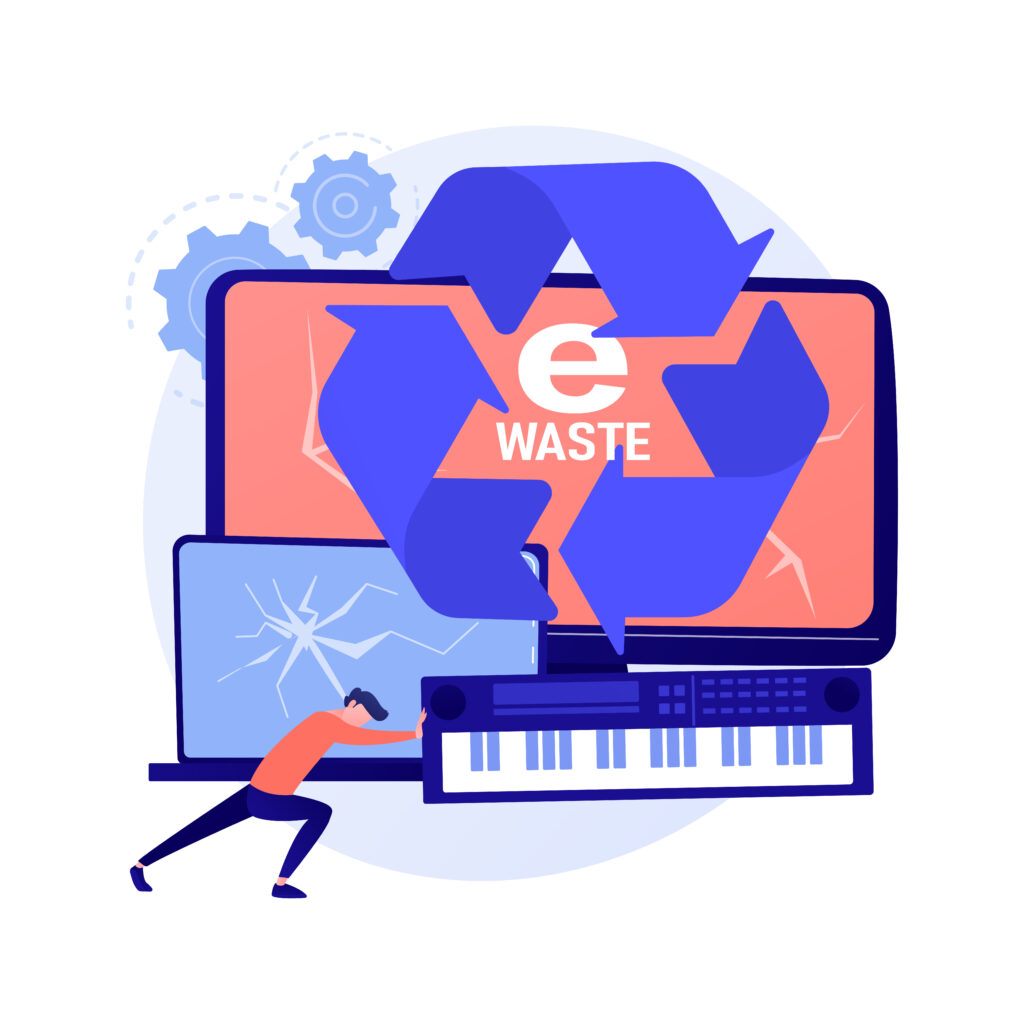
Electronic waste isn’t just an environmental issue — it’s a human crisis. As the world discards millions of tons of outdated phones, computers, and servers each year, the burden often falls on informal recycling sectors in developing countries. Behind the statistics are real people: children dismantling devices for scraps, workers exposed to toxic chemicals, and communities facing long-term health consequences. The human cost of e-waste is severe, and responsible IT asset disposition (ITAD) has never been more urgent.
If you need ITAD services please contact us below:
In regions across Africa, South Asia, and parts of Latin America, e-waste is often processed by informal recyclers with no protective equipment, proper tools, or environmental safeguards. Devices are burned to extract metals, releasing dangerous toxins like lead, mercury, and dioxins into the air and soil. These processes don’t just pollute the planet — they poison the workers and residents living nearby.
Children are especially vulnerable. Many are involved in e-waste scavenging due to poverty, exposed daily to substances that impair cognitive development and increase the risk of chronic diseases. Communities built around informal recycling hubs report higher rates of cancer, respiratory illnesses, and birth defects. The consequences are generational.
Although many countries have e-waste regulations, loopholes and lack of enforcement allow massive volumes of discarded electronics to be exported under labels like “used goods” or “donations.” Once abroad, tracking these shipments becomes nearly impossible. The reality is that a significant portion of the e-waste generated in developed nations ends up in regions with the fewest resources to manage it safely.
Organizations that fail to dispose of IT assets responsibly may unknowingly contribute to this system. Working with uncertified or low-cost recyclers can lead to downstream dumping, environmental damage, and human suffering — all in pursuit of cost savings or convenience.
Ethical ITAD is more than compliance — it’s a commitment to human dignity. Partnering with certified, transparent ITAD providers ensures that devices are processed through safe, regulated channels that prioritize worker health and environmental standards. It also means choosing reuse and refurbishment whenever possible, which reduces the need for new electronics and lowers overall waste.
Companies with strong ESG values must recognize that their IT equipment’s journey doesn’t end when it’s decommissioned. By taking ownership of the full lifecycle, businesses protect more than just data — they help protect lives.
The human cost of e-waste is real, heartbreaking, and preventable. Every retired device has a ripple effect far beyond the recycling bin. By embracing responsible IT asset disposition, organizations can play a pivotal role in breaking the cycle of exploitation and harm. Because in the digital age, what we throw away says just as much about us as what we create.
If you need ITAD services please contact us below: